Quick visual flow
A lightweight visual map of the path described in this guide.
Help Center
Esercizi e tracking
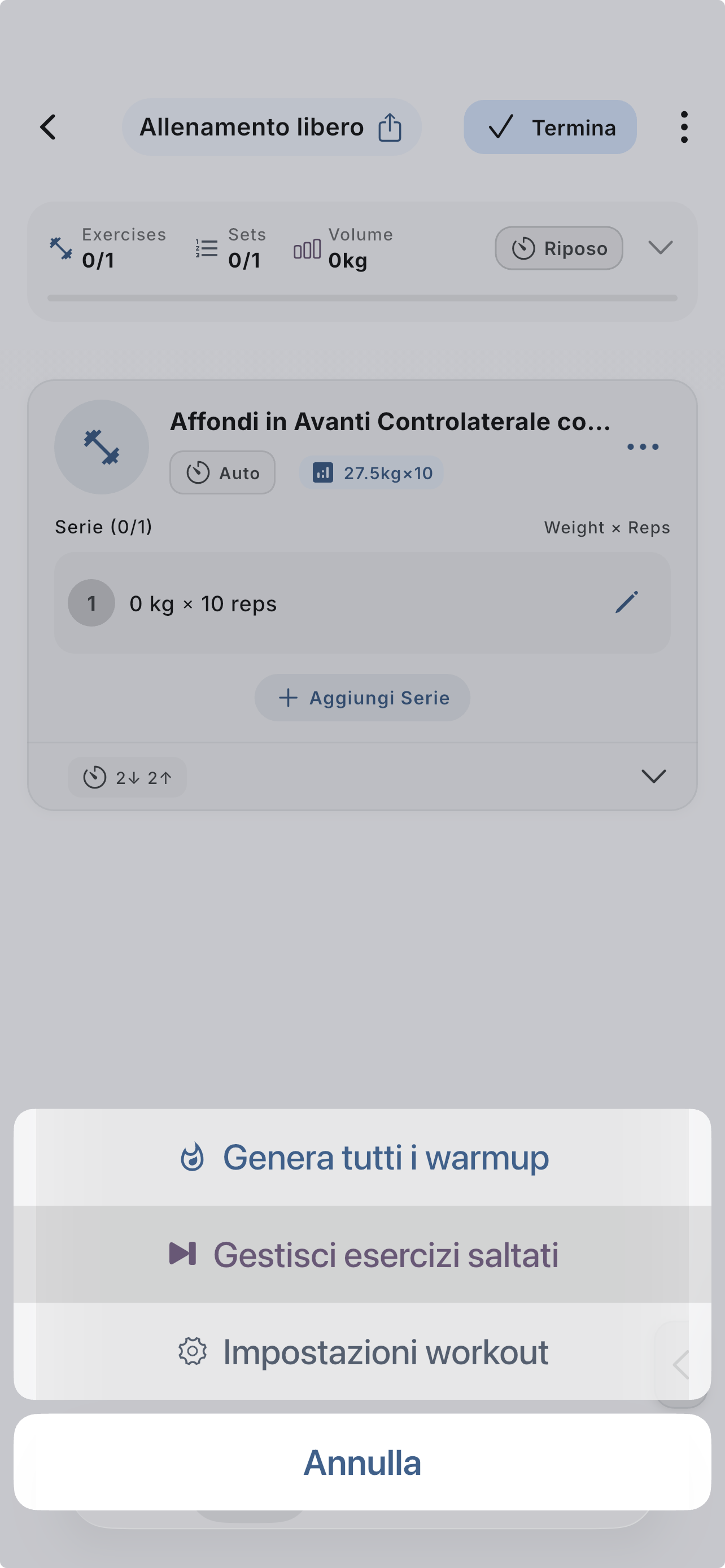
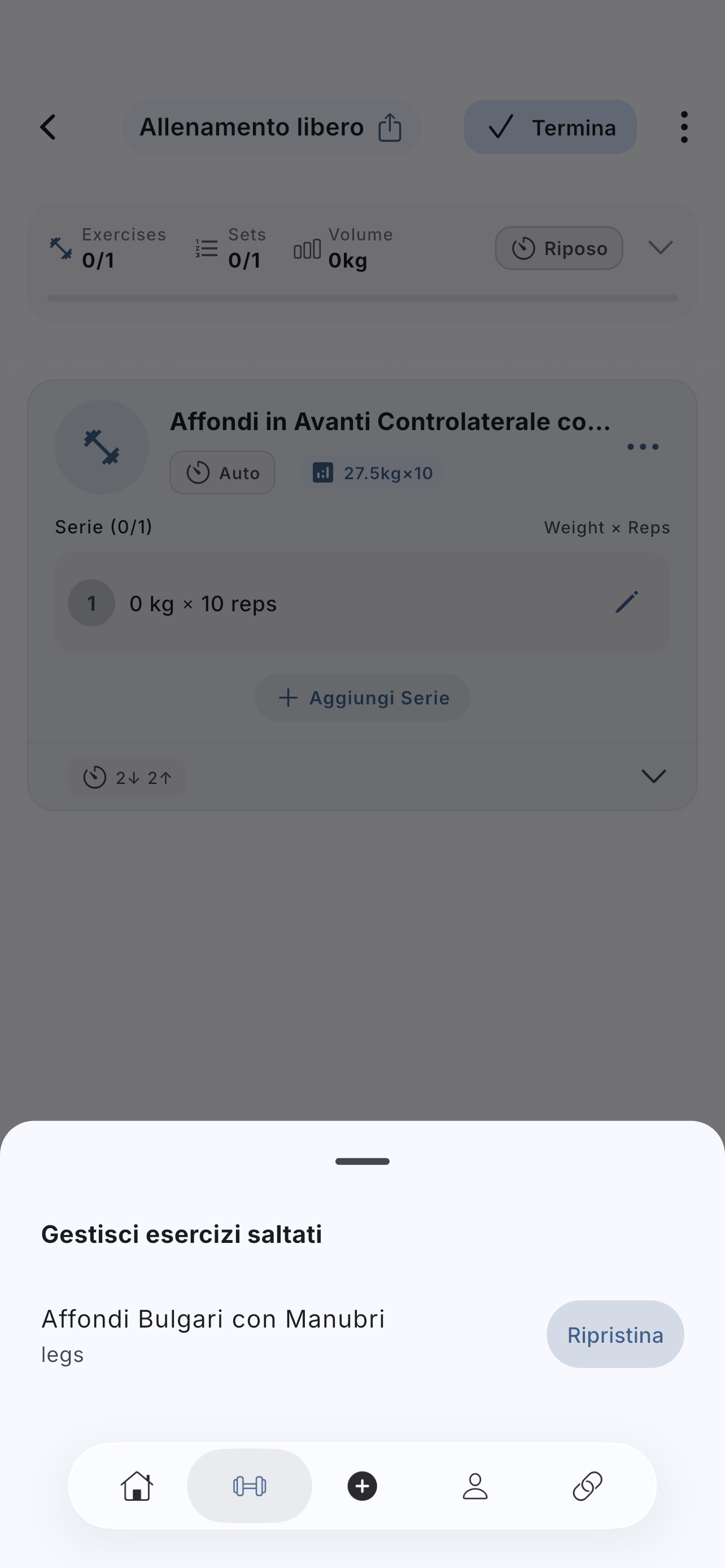
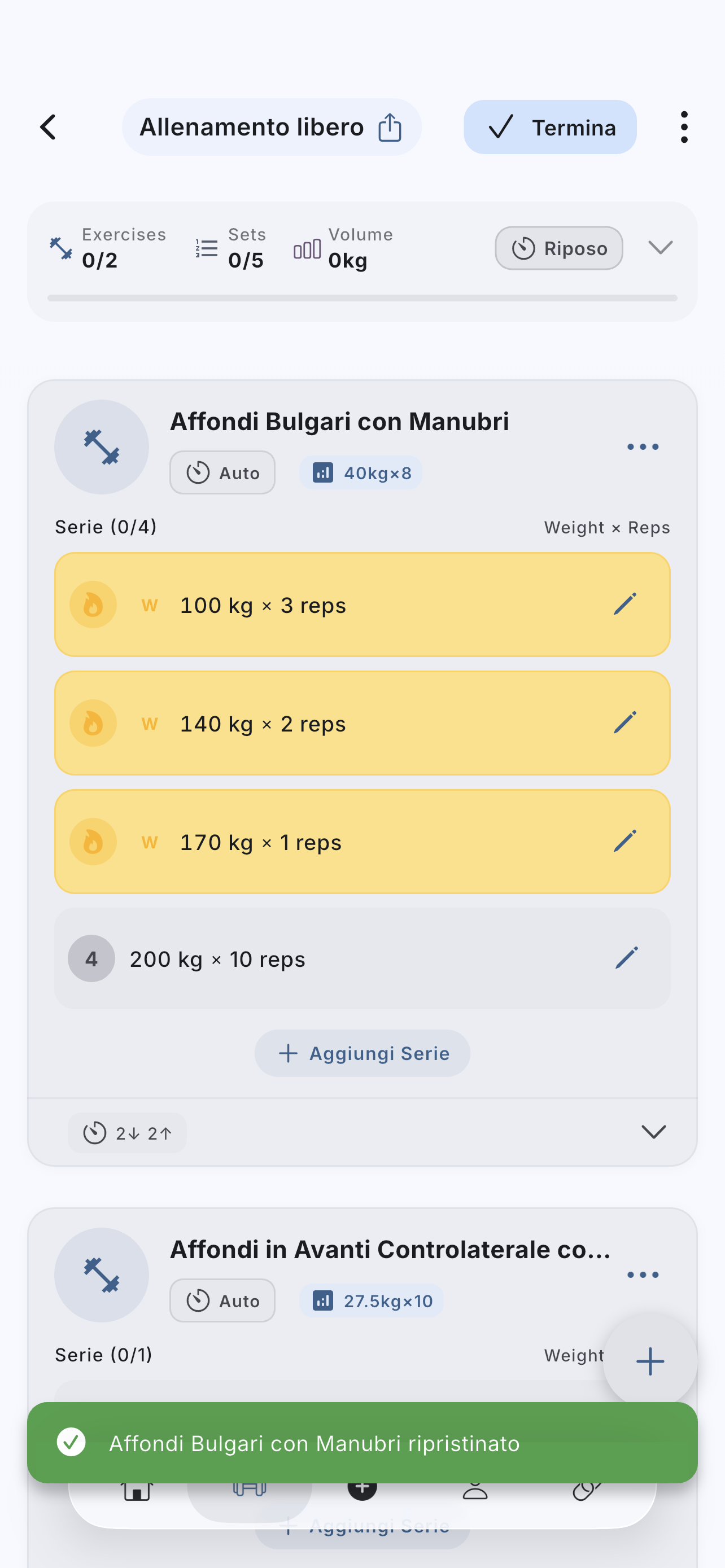
When part of the routine is not relevant that day, you can skip it without blocking the next exercise and without polluting history or analytics.
Help Center
Fast answers for training, setup, recovery, and common issues.
Wiki index
Top-level categories and guides arranged like a lightweight tree so the help center is easier to scan.
On this page
7 sections
A lightweight visual map of the path described in this guide.
Skip is most useful for accessory work, mobility, stretching, or optional variations. Its job is not to rewrite the routine, but to remove from the active workout what you do not want to perform today.
If you only leave an exercise incomplete, the app still treats it as pending work. If you skip it, it stops taking space in the visible list and no longer blocks the workout flow.
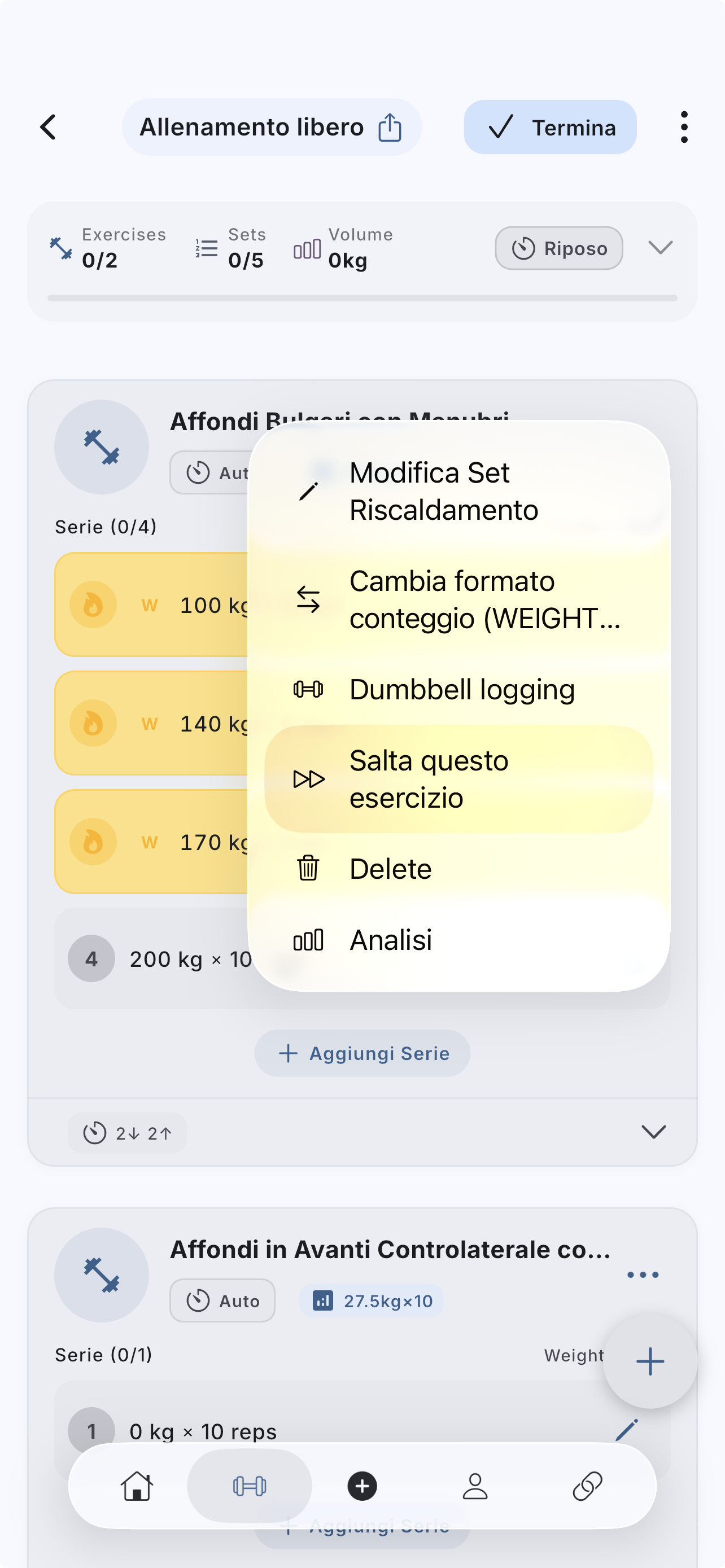
During an active workout, open the `⋮` menu on the exercise card.
Tap `Skip this exercise`.
The same logic also works for a Superset card: open the card menu and skip it there.
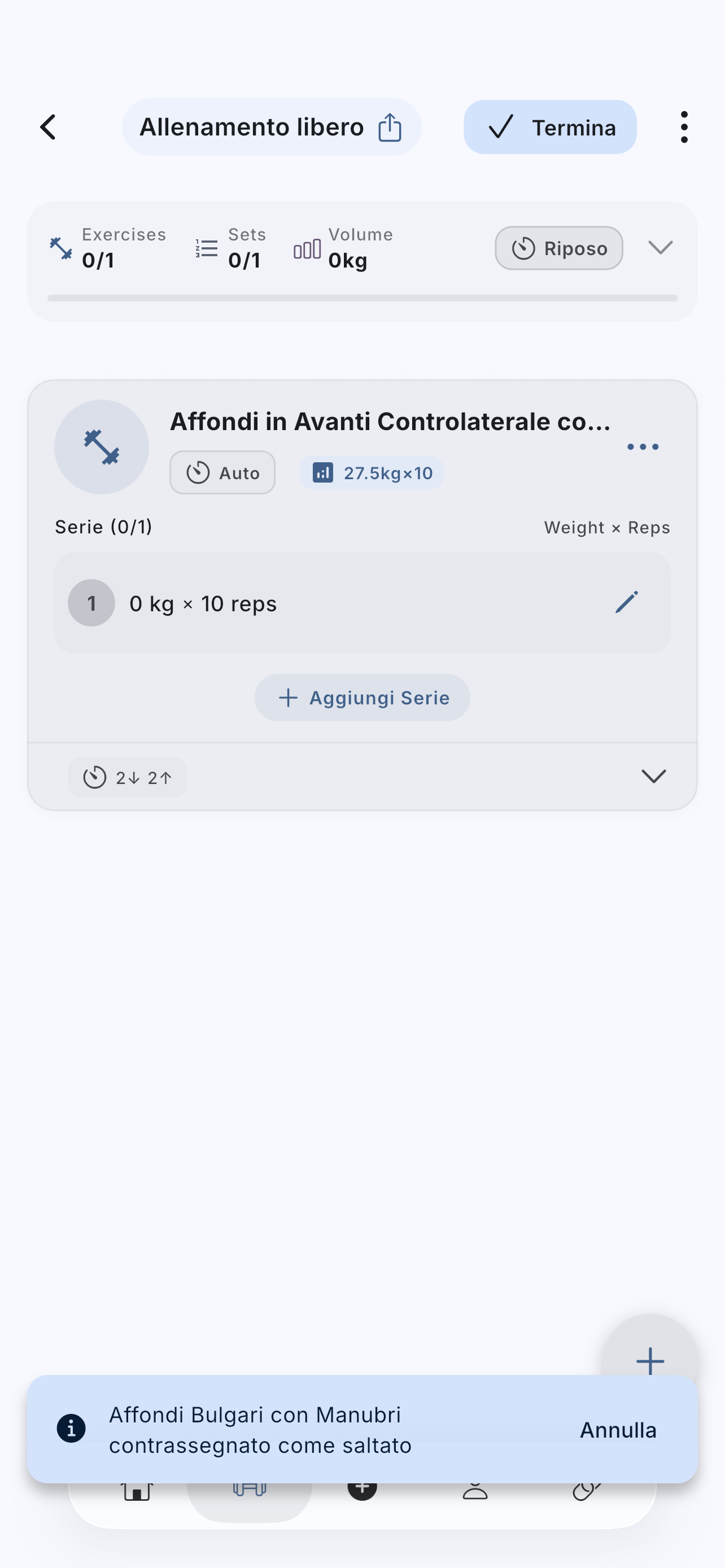
Right after that, the exercise disappears from the visible list and the workout can move on to the next useful exercise.
If the answer is not here, contact support with device, platform, a clear problem description, and ideally a screenshot.
Your feedback helps us improve guides for all users.
Useful follow-up reads that complete the same flow without sending you into internal documentation.
The real in-app flow: start from the simplified Home, use `Free Workout` or a template, add exercises, and finish without polluting history or analytics.
A useful training log starts with a few well-chosen fields. Use TUT and the metronome when you also want to control rep timing.
The Templates area is not a single list. `Library`, `Exercises`, and `Store` serve different jobs, and understanding that makes the app easier to navigate.